


It’s easy to turn something you enjoy into a scoreboard.
A lot of people start writing because they love to read and share their ideas. And then they start focusing on views. They start thinking, “What should I do to earn more money?”
That’s how many writers end up as podcasters or YouTubers. And after a while, they find themselves burnt out because they didn’t sign up for becoming a glorified views-chaser.
Many of us fall for this trap.
You start a business because you want freedom. Then revenue becomes the only measure of a good month.
You exercise because you like feeling strong. Then every workout becomes a judgment of your body.
The activity stays the same. Your relationship with it changes.
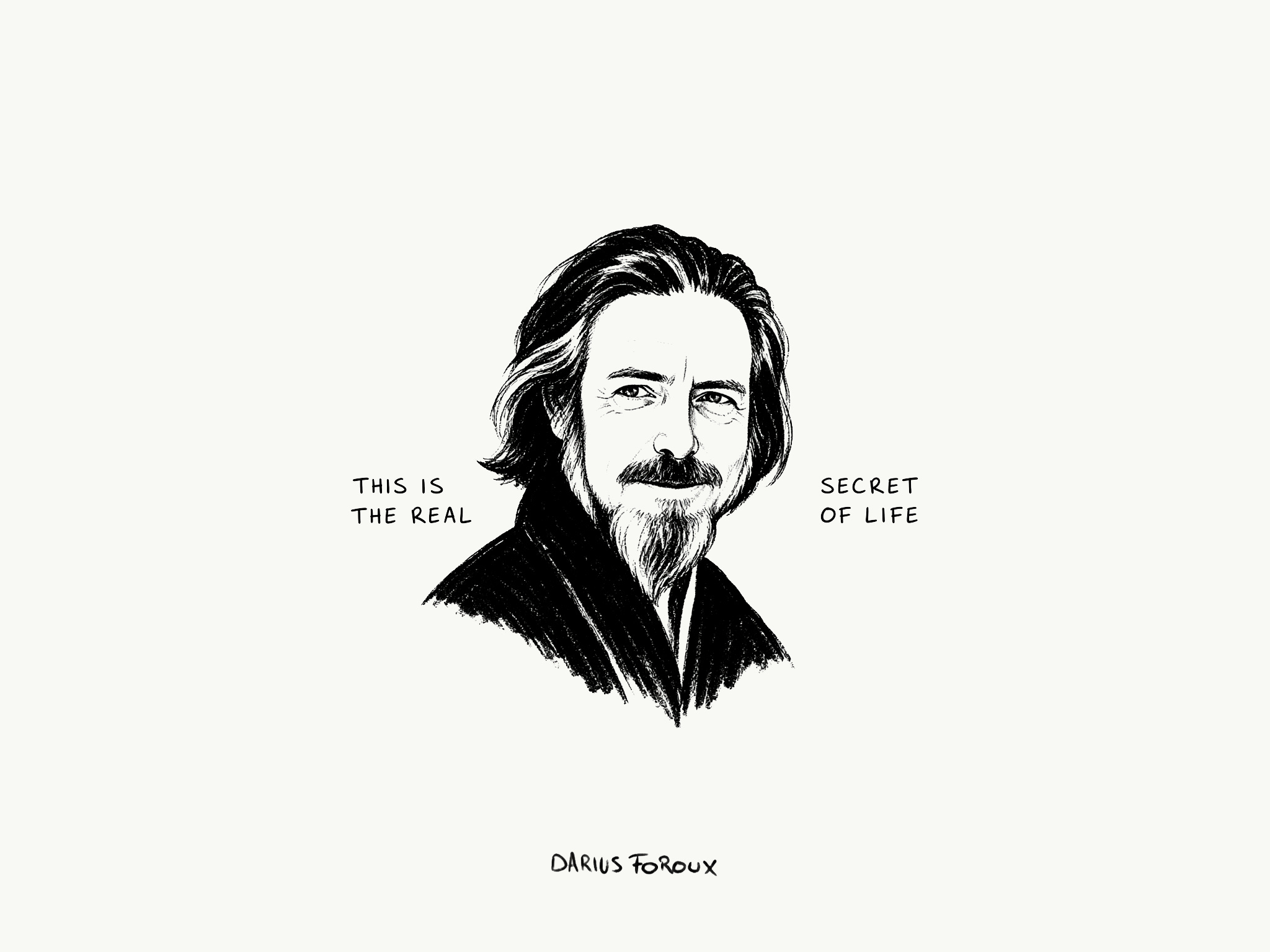
The philosopher Alan Watts spent much of his career explaining Eastern philosophy to Western audiences. One of his most useful ideas was that life is closer to play than to a journey with one final destination.
“This is the real secret of life: to be completely engaged with what you are doing in the here and now. And instead of calling it work, realize it is play.”
Watts wasn’t telling people to stop caring. He was showing us how easily seriousness turns into strain.
Winning can ruin a good game
A game needs rules, effort, and uncertainty. Without those things, there is nothing to play.
The trouble starts when winning becomes the only acceptable outcome. You stop enjoying the work, noticing what you’re learning, or appreciating the people around you. Everything becomes a means to the next result.
I recognize this pattern in my work too.
There is always another task, another target, and another idea to complete. If I’m not careful, I start telling myself that I can relax when everything is finished.
But everything is never finished.
You just keep going. And that’s okay. What’s the point of retiring and sitting on a beach, waiting until you die? There’s no fun and meaning in that. Everyone knows that.
It’s important to keep reminding yourself there’s no future moment of relief.
A game can have real stakes
Saying that life is a game can sound dismissive. Think of the serious things in life.
A breakup can be devastating. Parenting comes with serious responsibility. A business problem can affect employees and families.
Calling life a game does not erase consequences, of course.
It changes your mindset toward them.
You still prepare, work, protect people, and deal with what goes wrong. But you remember that your current role is not your entire identity, one loss is not the end of your life, and no score can tell you what you are worth.
Detachment is not indifference, though.
An athlete can care deeply about the match without believing that a loss makes life meaningless. A writer can want an article to succeed without allowing the numbers to decide whether the work was worthwhile. A parent can take responsibility without trying to control every outcome.
Play gives you enough distance to respond instead of merely react.
Stop living for the final chord
Watts often used music to explain this idea:
“We thought of life by analogy with a journey, which had a serious purpose at the end. But we missed the point the whole way along. It was a musical thing and you were supposed to sing and to dance while the music was being played.”
A song is not successful because it reaches the final note quickly. If that were the goal, the best song would be one loud chord.
The music matters because of what happens between the beginning and the end.
Life is the same.
You need goals because they give the game direction. But accomplishing the goal is not the purpose.
If you spend ten years resenting the work required to reach a milestone, the milestone cannot return those years to you.
The question is not only, “Am I making progress?” It is also, “Do I want to live this way while I make progress?”
Play hard without clenching
Here’s how I apply this idea:
Name the game. Are you playing for money, status, approval, mastery, service, or curiosity? A game becomes dangerous when you don’t know which one you’re in.
Choose your rules deliberately. Many rules are inherited. You don’t have to pursue the largest company, the highest income, or the most visible life.
Care about the process. Results matter, but they arrive irregularly. The process is where you spend your days.
Keep your identity larger than the score. You can lose money, miss a goal, or publish something that fails without becoming a failure.
Know when to stop playing. Some games no longer fit your values. Leaving them is not always quitting. Sometimes it is good judgment.
I’ve written before about why you shouldn’t take life too seriously.
I believe that we should work hard without turning every outcome into a personal crisis.
You can care deeply and still hold the result lightly.
That’s the balance Watts was pointing toward.
Be fully engaged in the work, the relationship, the conversation, or the challenge in front of you. Play well.
Try to win.
Just remember that winning was never the only reason to play.
I don't know why it brought tears to me 😭 but yes it worth to read this article ❤️
I love the way he talks. :) Great find and recommendation :)