


This is a Wise & Wealthy Academy post. Every week, I publish a new training that focuses on a single idea from one of four areas: clear thinking, investing psychology, career antifragility, and personal execution.
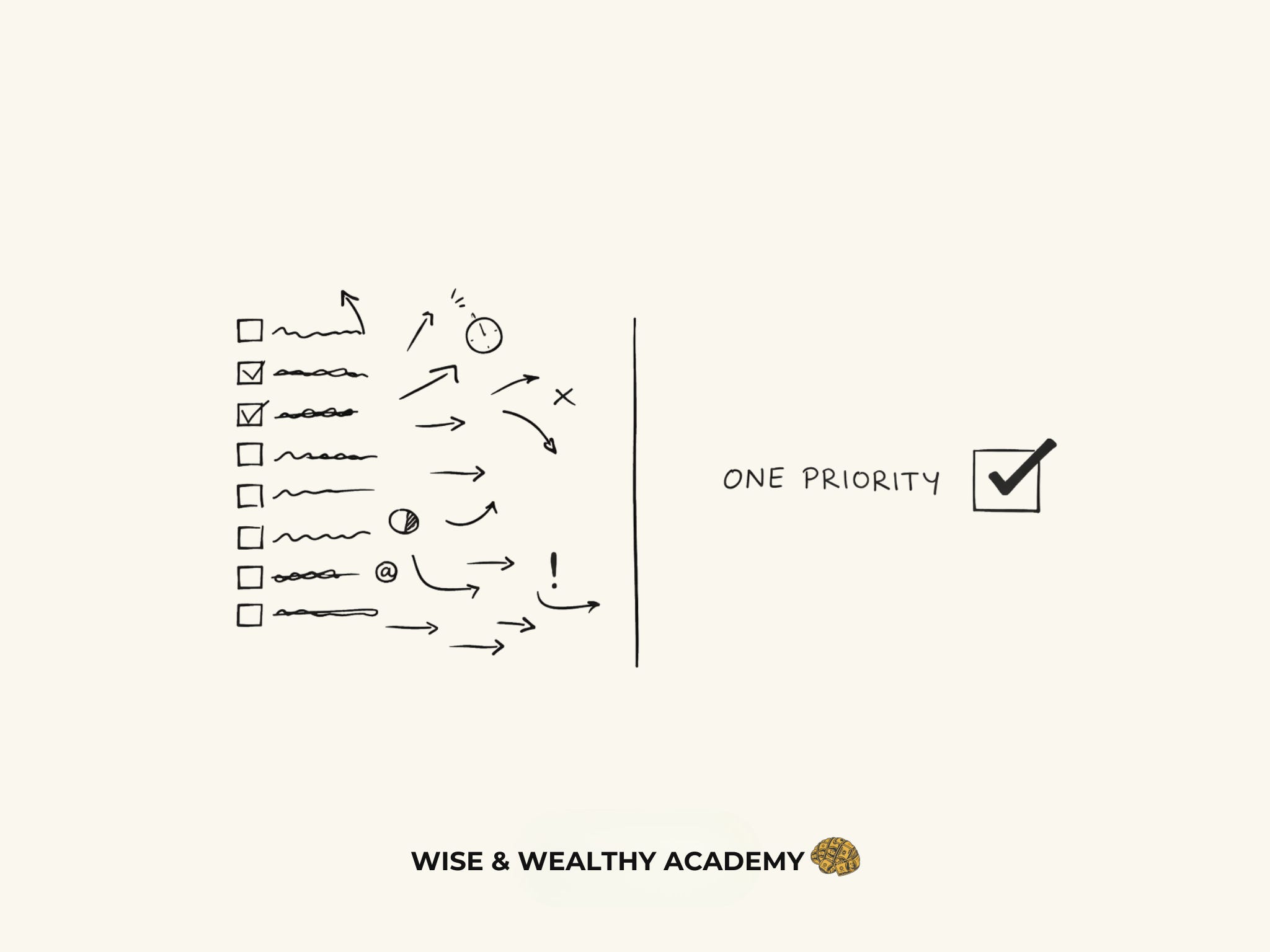
I used to start every morning with a list.
Sometimes I had up to fifteen items on it. All of them felt important.
All of them were competing for the same hours. By noon I’d done six things halfway, finished nothing completely, and felt vaguely behind on everything.
I thought the problem was discipline.
So I told myself to work harder, start earlier, and push through. So I did. And I still felt behind.
The problem wasn’t my work ethic. It was my approach.
The Real Productivity Problem
When I surveyed my readers last year, I asked two questions: what’s your number one priority, and what’s standing in your way?
Almost nobody said “I’m lazy.” Here’s what they actually said:
“There are so many options I’m stuck not knowing what to choose or what to focus on. This results in me not doing much.”
“Everything seems equally important.”
“Too many things to do. Little time. Juggling priorities.”
“Clarity of thought is my main obstacle to getting started.”
These aren’t unmotivated people. It’s simply a matter of being overwhelmed.
And that’s a problem you can easily solve.
Overwhelm doesn’t look like lying on the couch. It looks like a full calendar, a long to-do list, and the persistent feeling that you’re running hard but going nowhere.
It doesn’t mean we’re not disciplined. It just means we have too much stuff going on in our minds.
I talk about the power of keeping things simple in this video:
To Be Everywhere Is to Be Nowhere
Seneca said that two thousand years ago. He wasn’t talking about productivity. He was talking about life.
Most people treat their time like a container they need to fill.
More goals.
More projects.
More commitments.
More skills to learn.
More opportunities to chase.
The assumption is that a full life is a good life.
Seneca disagreed.
A life spread thin across too many things isn’t a full life. It’s a fragmented one. You’re present everywhere and nowhere at the same time. You touch everything and finish nothing.
The modern version of this is a fifteen-item to-do list, a calendar with no white space, and the constant feeling that you’re behind despite working all day.
That feeling is a sign that you’re doing too much.
Deliberate is the word that matters here. Not busy. Not productive.
It means choosing what actually deserves your time and cutting everything else without guilt. Saying no to the good things so you can say yes to the essential ones.
Seneca also said this:
“It is not that I have too little time. It is that I waste too much of it.”
The problem has never been that we don’t have enough hours.
The problem is that we’ve filled those hours with the wrong things and called it ambition.
Why Hustle Without Clarity Fails
There’s a version of productivity that looks impressive and produces very little.
Busy inbox. Back-to-back meetings. Constantly switching between projects. Always available. Always responsive. Always moving.
Activity is easy to confuse with progress because it feels like effort. But effort without direction is just exhaustion with a clean conscience.
The people who actually get things done, the writers who finish books, the investors who build portfolios, the entrepreneurs who ship products; they’re not working more hours.
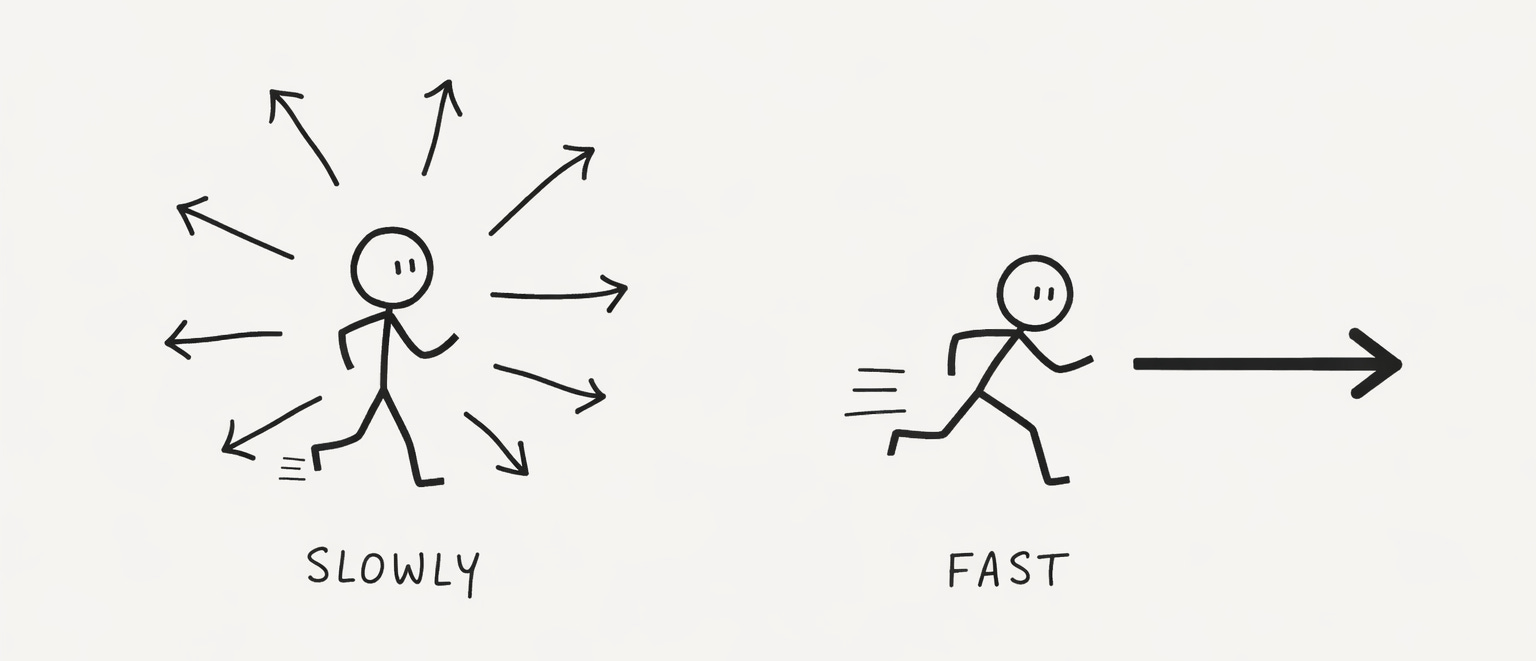
They’re working on fewer things at a time.
They decide what matters before they start, and they protect that decision against everything else competing for their attention.
Clarity comes first. Execution follows.
The One Priority Rule
The framework is simple. Before you start any day or any work session, answer one question:
What is the single most important thing I can finish today?
Not the most urgent. Not the one someone else is waiting on. The one that, if completed, would make the most meaningful difference to where you want to go.
Write it down. That’s your priority. Everything else is secondary until it’s done.
This sounds obvious. But it isn’t practiced widely.
Most people start their day by opening email, which immediately hands control of their attention to other people’s priorities.
Or they start with the easiest items on the list, which feels productive but moves nothing important forward.
The One Priority Rule forces a decision before the day starts.
A brain with a clear target is dramatically more effective than one trying to process twelve competing demands at once.
The Protocol
Let’s talk about how to put this into practice. Here are three protocols you can implement.