


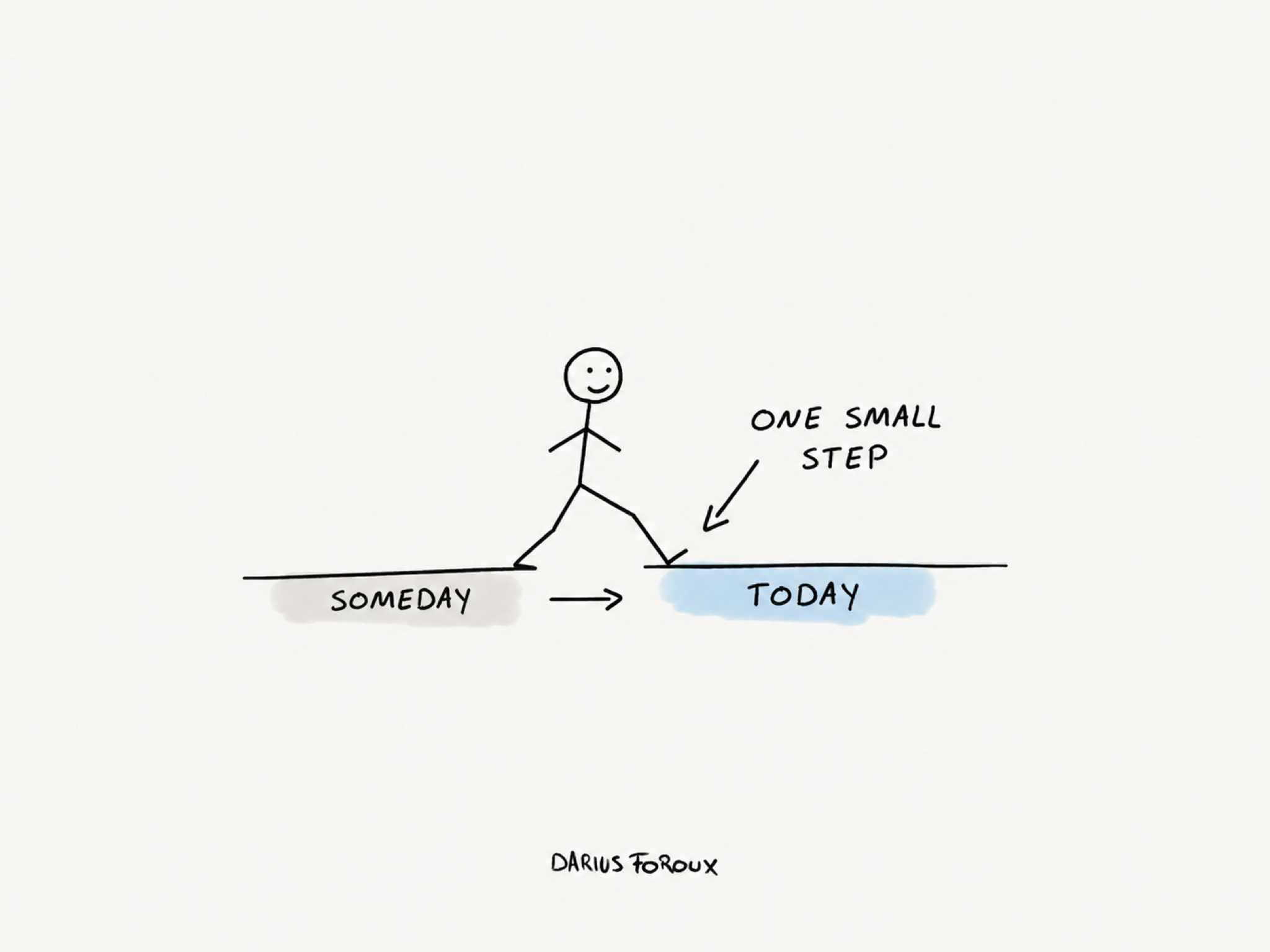
When I was 17, I got into reading in my free time. I remember reading books like Crime & Punishment, American Psycho, Post Office, etc.
I loved it. Before I finished one book, I would buy the next one and got excited about starting it.
Reading was so important to me, that I had this urge to write books myself.
But it wasn’t until I was 28 that I actually started writing a book.
Before that, I tried to start a few times, but it never amounted to anything.
So when someone tells me they’ve wanted to start a business, write a book, or learn a skill for years, I understand.
You can genuinely want something and keep putting it off. And after a while, you get so used to talking about it that you barely notice another year has passed.
What are you waiting for?
It can be many things. Maybe you’re worrying about failure. Maybe you just don’t know how to start.
But you can overcome those things, right?
And yet, we just don’t start.
What are you avoiding?
In 2013, I felt stuck in my career. I’d started a business with my dad two years earlier, and I wanted to do more and learn more.
I tried freelancing. I built websites, did copywriting, content marketing, and some design work. But it didn’t take off. I avoided the uncomfortable work that came with growing a business.
I had skills I could sell. But I still had to go out and sell them.
That part is easy to leave out when you imagine working for yourself. You think about the freedom, the work you enjoy, and the income you could earn.
Then you have to approach someone, explain what you can do for them, and risk getting ignored.
And suddenly you find something else to do.
I recognize that tendency in my writing too. When the writing gets hard, answering emails or reading another article can become very attractive. I can fill a whole day with useful activities and still avoid the one thing I intended to do.
That’s why I think it helps to be specific about your procrastination.
Which part are you putting off? Making the offer? Finishing the draft? Showing someone your work?
Once you name it, you can do something about it.
“I need to work on my business” gives you plenty of room to stay busy. But it’s too vague.
Sending one potential customer an email gives you a task you can actually finish.
You don’t need permission to begin
I was 28 when I wrote my first book, Win Your Inner Battles. People around me didn’t really take it seriously. Some thought it was just a gimmick, especially because I self-published the book.
I hadn’t trained as a writer, and I wasn’t a psychologist either. But I’d applied ideas about dealing with fear to my own life, and I had something I wanted to share with the world badly.
There was something inside me that told me, “You have to share this. Maybe one person needs to hear this message.”
I could’ve spent more years wondering whether I was qualified to write it. Instead, I wrote the book.
That doesn’t mean everything you make will find an audience. You might put something out and get very little response. You might realize your idea needs work. But now you have something you can improve.
Before that, you’re trying to judge a thing that doesn’t exist.
I’m a big believer in education. And some professions require qualifications for good reasons. But you don’t need a degree or certificate to write an article, practice a language, or start a business.
It’s worth looking at the conditions you’ve attached to your goal.
Which ones are actually necessary? And which ones have you added because beginning makes you uncomfortable?
Give yourself something you can do today
You don’t have to make a dramatic change to take a goal seriously. If you want to start a business, you can keep your job while you test an idea. If you want to write, you can begin with a paragraph.
The first step should fit the life you actually have. Otherwise, you’ll keep waiting for a different life.
If your week is already full, take a look at Hourlift, the free tool I made. It suggests recurring work you could delegate to AI, so you can make a little more room in your day.
I’ve felt stuck quite often in my writing career over the last decade. But since I’ve learned how to use AI in an effective way, I can never use excuses anymore.
Because I delegate so much work to AI, I can always make time for some creativity.
Look, I get it. Life is demanding and there’s currently a lot of pressure on us to succeed.
But let me tell you something: Life is not going to get easier, no matter how long you wait.
In fact, it will only get harder! So you might as well start whatever it is that you want to do now.
Here are a few tips to make it easier:
Pick one thing. If you’ve been talking about five ideas, choose the one you want to try first. You can come back to the others.
Define a small piece of real work. Write the introduction, make the sample, or send the email. Choose something that gets your work off the ground. You just need to get going.
Give it a place in your day. Look at your calendar and decide when you’ll do it. Even 20 minutes gives you a starting point.
Decide when you’ll return to it. One productive afternoon feels good, but you also need to work on the thing after the initial excitement wears off.
And let yourself be a beginner. Your first attempt can be disappointing without meaning you should give up.
If you don’t know how to do something, learn enough to make the next attempt. Reading and studying are useful. I do both. But you want to give yourself a chance to apply what you learn.
In On the Shortness of Life, Seneca wrote:
“The whole future lies in uncertainty: live immediately.”
You can’t know exactly where a project will take you. I certainly didn’t know where writing would take me.
But I know that the years I spent wanting to write didn’t produce a book. At some point, I had to sit down and write it.
What’s the equivalent for you? Give yourself some time today and do that.
My new course, AI Pro, is out now.