


This is a Wise & Wealthy Academy post. Every week, I publish a new training that focuses on a single idea from one of four areas: clear thinking, personal execution, career antifragility, and investing psychology.
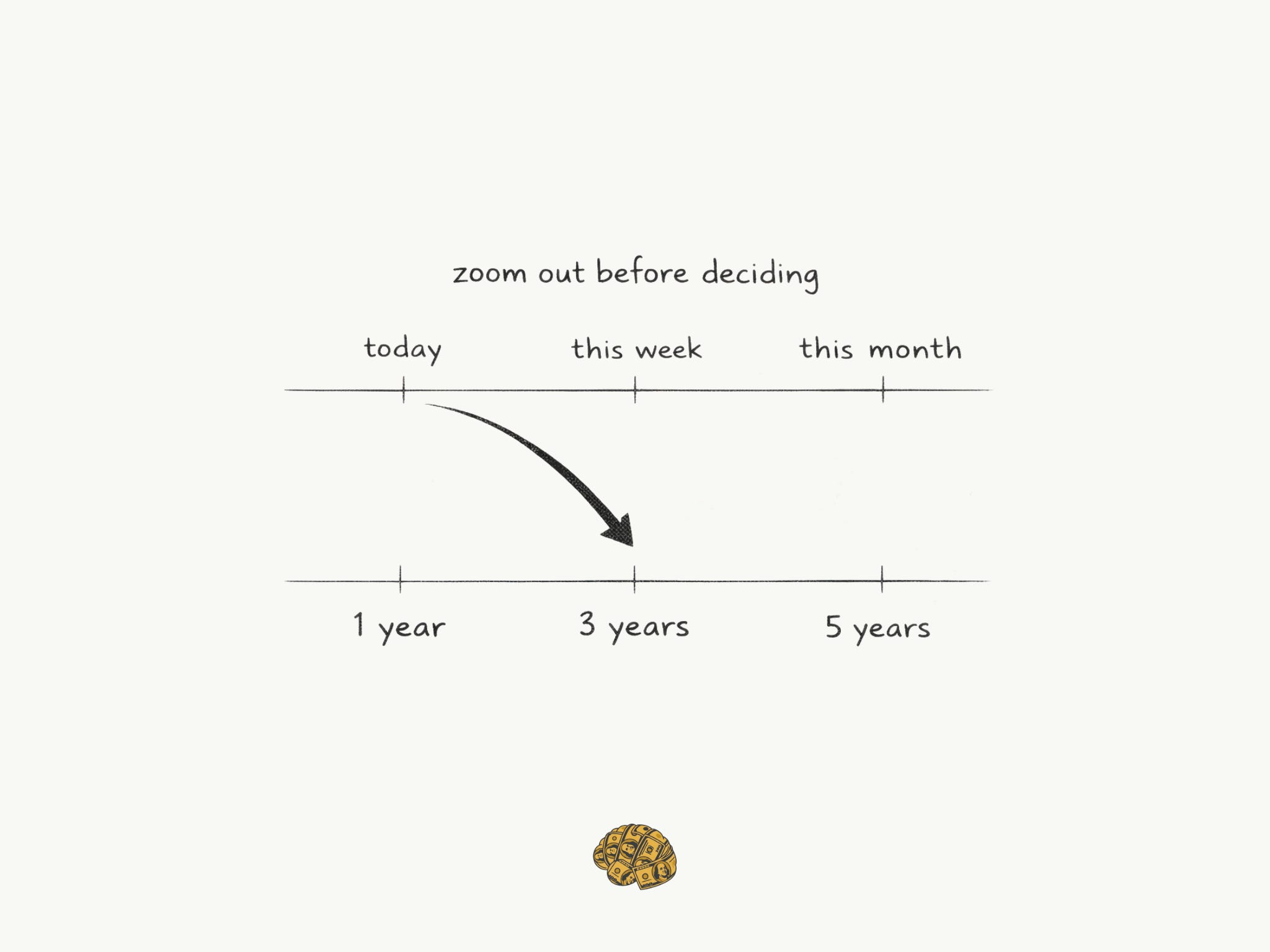
Most people are tactical thinkers.
They respond to what’s in front of them. The email that needs a reply. The argument that needs to be won.
The opportunity that needs to be grabbed right now. They move fast, react often, and call it being productive.
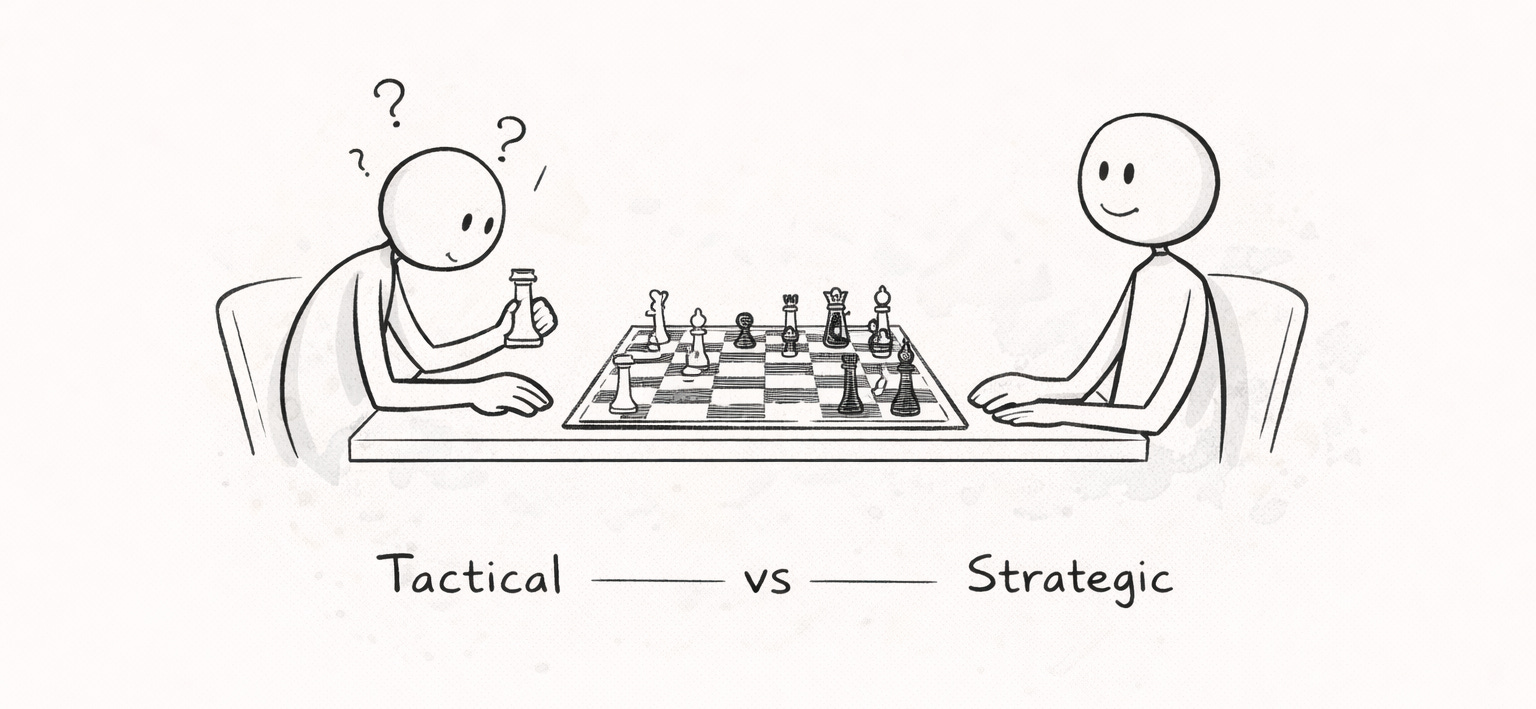
But tactical thinking and strategic thinking are not the same thing.
Tactical thinking asks: What do I do right now?
Strategic thinking asks: What move, made today, puts me in the best position three years from now?
Most people never ask the second question.
Not because they’re shortsighted by nature.
But because their situation won’t let them.
Why You Can’t Think Strategically From a Weak Position
Strategy is a luxury of strength.
When you’re financially fragile, every decision feels urgent. You can’t afford to wait. You can’t afford to say no. You need this job, this client, this deal. The bills are coming and the margin for error is thin.
When you’re emotionally dependent on the outcome, you can’t zoom out. You’re too close to it.
Neediness kills strategic thinking.
Jim Camp, whose book Start With No is one of the best books on negotiation ever written, built his entire system around one insight:
The person who needs the deal loses the deal.
When you need something, you compromise too early, give up too much, and make decisions based on short-term relief rather than long-term position.
“You do not need it,” he writes. That’s the foundation of leverage.
The same principle applies to your career, your relationships, your investments, and your life.
What Chess Actually Teaches Us
Most people believe grandmasters win by thinking ten or fifteen moves ahead. That’s a myth.
There’s a famous story about José Capablanca, one of the greatest chess players who ever lived. He lost a game to a much weaker player.
Afterwards, someone asked Capablanca how far ahead he thought. “Ten moves,” he said. Then they asked the winner. “Only one,” the man replied. “But it is always the best move.”
Strategic thinking isn’t about predicting the distant future. It’s about making the right decision now, with a clear understanding of where you want to go.
Chess coaches teach their students to think two to four moves ahead with purpose, not ten moves ahead in a fog. The goal isn’t prediction. The goal is clarity about your position and your direction.
Most people in life don’t even think one move ahead. They react. Something happens and they respond from emotion, habit, or immediate self-interest. There’s no plan. There’s no position they’re trying to reach.
The grandmaster plays with a direction in mind. The amateur just plays.
The Tactical Trap in Real Life
I notice this in my own life constantly.
My wife and I used to have the same argument on repeat. Different topic each time. What we did last weekend.
How we spend money. Something someone said at dinner. We’d go in circles, get frustrated, and drop it without resolving anything.
Eventually we figured out what was happening. We were arguing tactically. Every argument was about the immediate situation. The specific thing. The recent event.
When we zoomed out and asked the bigger question — why are we together, what kind of life are we building, what actually matters to us — the tactical stuff either resolved itself or stopped mattering.
Not because the problems disappeared. Because we could finally see which problems were worth solving and which ones were just noise.
This happens in careers too. Someone stays in a job they hate because leaving feels risky right now.
They’re thinking about this month, not the next three years. Someone accepts bad terms from a client because they need the money.
Someone makes a reactive investment decision because the market is moving and they feel left behind.
All tactical. All driven by immediate pressure rather than long-term direction.
Building the Foundation
Strategic thinking starts with one question: what would I need to have in place to be able to walk away from this?
From a bad job. A bad deal. A bad relationship. A bad situation.
The answer is almost always the same: