


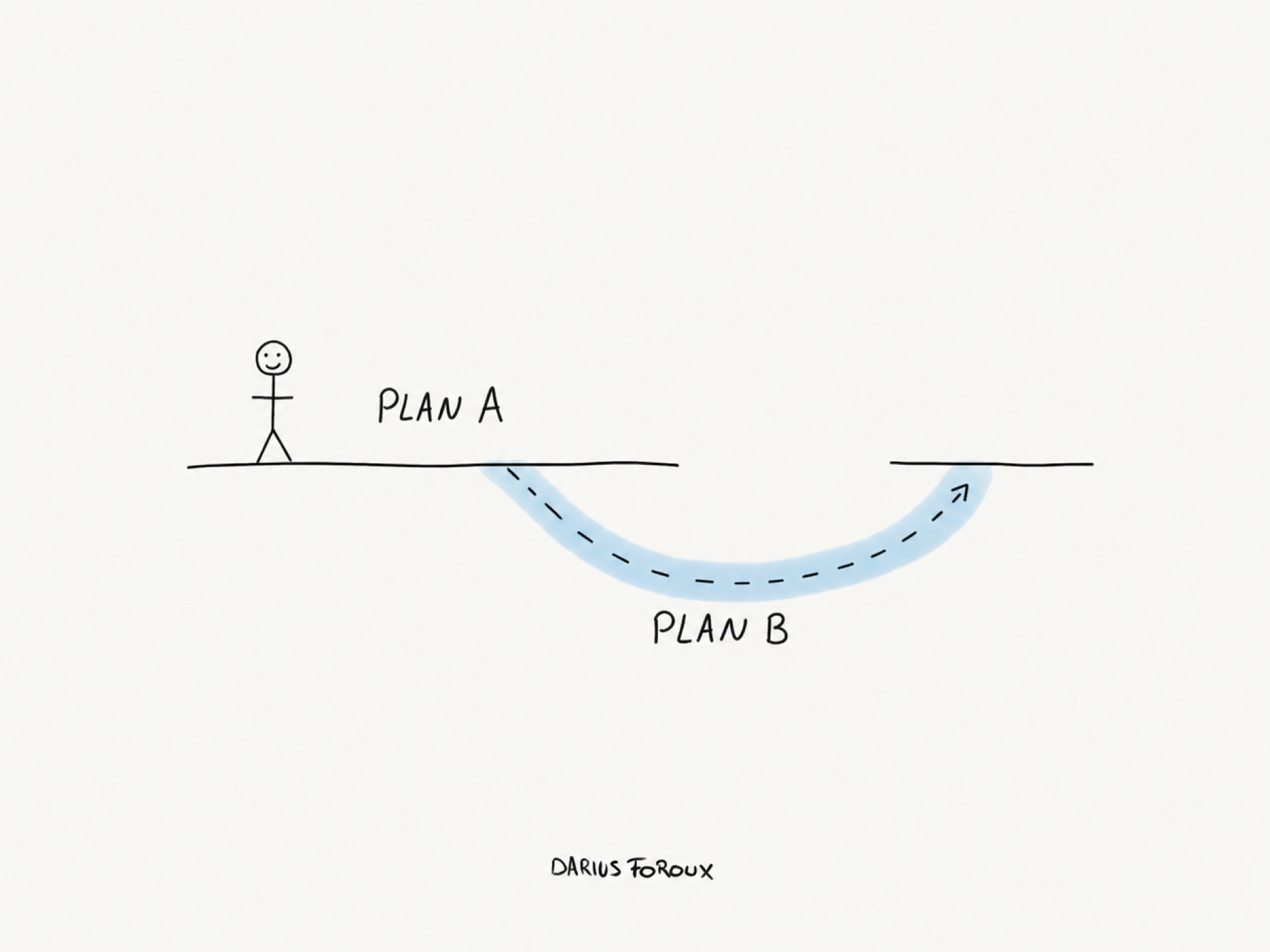
We’ve been living in a heightened state of economic uncertainty since March 2020.
A lot has happened and is still happening. This platitude seems more relevant than ever:
“Prepare for the worst, hope for the best.”
But we also have to be honest. The Stoics talked about preparing for the worst 2,000 years ago. In a letter to Lucilius, Seneca wrote:
“We should therefore reflect upon all contingencies, and should fortify our minds against the evils which may possibly come.”
And while you’re preparing for what could go wrong, you can also work toward what you actually want. Maybe that’s a different field, your own business, or work that gives you more freedom.
Recently, a 33-year-old reader shared the following with me:
“I am currently and slowly working on a plan B for my career, which requires some time and planning, and my current job is actually convenient for the type of preparation needed before making the leap. I just find some days are harder to cope with than others and I find myself being impatient at times because I’d like for this plan B to come faster.”
I can relate to this. Once you’ve decided you want something else, it can’t happen fast enough.
So how do you build the career you want while dealing with the reality of life? And when do you actually go for it?
Here’s how I’d approach it.
What do you even want?
One of the biggest challenges right now is that there are so many opportunities, it’s hard to decide what you want.
And there’s another thing I’ve faced for many years. I still deal with it whenever I make a big career decision. What do you prioritize?
Money
Mastery
It’s important to make a distinction between these two things. You can want both, but which one is leading your decision?
Here’s the thing about money. We’re not good at judging whether something will make money or not. We just see things from the outside.
For example, a lot of people think that all social media influencers and YouTubers are rich. This isn’t true. That’s what we think from the outside. We see the successful ones and assume that’s what the career looks like.
So we think, “I should pursue that career because everyone doing it is rich.”
That’s a bad way to make a decision.
The right way to make a career decision is to look at your skills, look at your passions, and see where there’s an overlap. Be realistic, and be blunt about what you’re good at.
Where does your potential lie?
This is the question you must answer first. If you don’t answer it, you don’t know what you should do. You don’t have a direction.
If you don’t have a direction, you’ll keep chasing whatever looks attractive from the outside.
Mastery means choosing something you want to spend years getting better at. Can you see yourself doing the work, including the boring parts? Can you get good enough to provide real value to people?
Get clear on this and make a decision. And don’t make it with resentment, like, “Well, there’s no other option. I don’t have a choice.”
There are a lot of things you can do in the world. You have to think in possibilities. Choose something you want to pursue, then give yourself a real chance to get good at it.
Gravity is working against you: Focus on momentum first
Look, the odds are against you. There are a lot of factors working against you.
There’s competition, but there’s also you. We’re always distracted. Entertainment is always calling us. We can spend our entire days consuming content, going to the mall, restaurants, bars, whatever.
There are a million things you can do.
All those things have a pull on your attention. And your career gets whatever attention you have left.
Think about launching a rocket. It takes an enormous amount of force to get off the ground. This is how I look at building momentum in a career. Getting started requires a lot of energy, and you have to keep putting in the work after the excitement wears off.
When I started writing seriously, I knew it would take years. I’d already tried freelancing, so I’d had a taste of how hard it was to get something off the ground.
Especially in the first several years, it takes a lot of time and dedication. You have to be clear with yourself and the people around you: This is what I want to do, and this is what it requires.
That means making sacrifices for several years.
Less entertainment, fewer evenings out, and less time jumping from one interest to the next. You can’t keep doing everything you did before and expect to build a completely different career.
But you don’t make those sacrifices with resentment. You do it because you want to. You want to get better at your work and build something. So it doesn’t feel like you’re missing out on everything else.
If you’re truly committed to starting something, get started. But keep going. Don’t use all your energy getting off the ground and then quit before you’ve given yourself a chance.
The paradox: The more you want something, the more desperate you become
Now you know what you want, you know it requires work, and you’ve decided to dedicate yourself to it.
Here’s the paradox. If you want it too much, you get in your own way. I think of this as one of those unwritten rules of life: The more desperately you want something, the less likely it is to come.
The best things often happen when you don’t expect them. You’re doing your work, meeting people, learning things, and something comes out of it that you couldn’t have planned.
You have to work from a place where you accept any outcome. Enjoy the process so you don’t put too much emphasis on the end result. Sure, you’re dedicated and you want to achieve something. But if you put too much pressure on yourself to succeed, you’ll suffer for years and make desperate decisions along the way.
You’ll accept work you don’t want, let people keep you waiting with promises, or fall for someone who tells you they can make you rich quickly.
That’s why it’s so important to crave less. In a letter to Lucilius, Seneca wrote:
“It is not the man who has too little, but the man who craves more, that is poor.”
The money rules are simple:
Live below your means.
Don’t upgrade your lifestyle every time you earn more.
Stay out of consumer debt.
Keep enough money set aside that you don’t have to accept just any job or client to pay the bills.
With that financial cushion, you can make better decisions. You can pursue a better career without needing every opportunity to work out immediately.
And always do the honest thing. Don’t go for shortcuts. Don’t fall for get-rich-quick schemes or follow people who are just in it to scam others. Surround yourself with positive people who really want to make a change and who do things for the right reasons.
Your intentions matter. Sure, honest people get screwed too. That’s why you also have to be strategic.
This is why I like Robert Greene’s work so much. Books like The 48 Laws of Power and The Laws of Human Nature are perfect weapons of self-defense for people with the right intentions.
I understood that life was hard and a lot of people had bad intentions. By reading about human nature, I could guard myself better and make better decisions. You can do the right thing and still pay attention to what other people are doing.
When do you make the move?
You start now. Don’t wait.
Everything you do now should lead to something. Networking, talking to people, helping them, providing value, starting a blog, building a brand, starting a business.
What can you do now that will lead to a better outcome in the future?
You can start doing those things while you still have your current job. That’s exactly the opportunity the reader has. You don’t have to wait for the day you quit to take your next career seriously.
Set some big goals for yourself, things that really motivate you. Break them down into daily habits and start working toward them.
Want to be a writer? Make sure you write every day.
Want to build a business? Work on generating revenue every day.
I don’t need to tell you all this stuff. You read self-improvement articles. You know what it takes to learn a skill, finish a project, or get better at your work. We often just lack the drive and motivation to go for it.
I hope this gives you some of that drive. Because we can’t afford to keep waiting for the perfect moment.
The more action you take, the more you put yourself out there, the more you try, the higher the odds of succeeding at some point.
It’s simply a matter of when.