


Most people want the lifestyle of the top 1% without actually becoming a person who belongs there.
They look at the bank accounts, the freedom, and the calm of successful people and think, “I want that.”
Then they look at their own life and can’t help but think that they should be further ahead. They are tired of struggling year in year out, with nothing to show for.
Their bank account, house, social life, and habits... it’s the same as last year. And yet, they want to have the life of a top 1% person.
The problem is that they try to get those results while keeping the habits of the 99%.
I used to think that if I just worked harder, the results would show up immediately. When they didn’t, I got frustrated. I thought I was doing something wrong.
So naturally, I didn’t truly change my life. I just made some random changes and hoped for a change.
It doesn’t work that way. Results are a lagging indicator. They are the leftovers of who you were six to twelve months ago.
If you want to change your life in the next year, you have to stop obsessing over the outcome.
You need to focus on your identity.
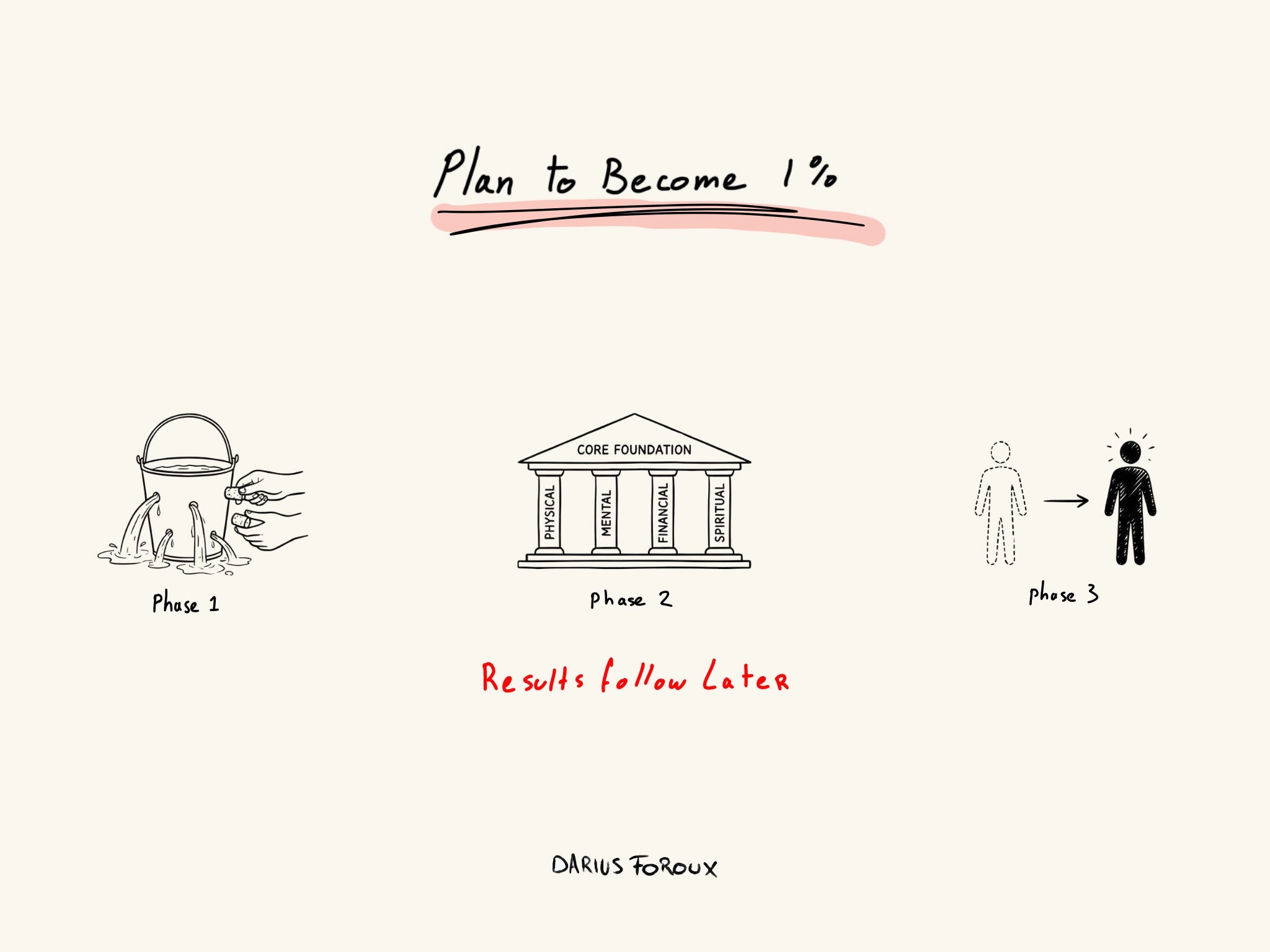
Here is how I look at the process of becoming a top 1% person.
The Lagging Indicator
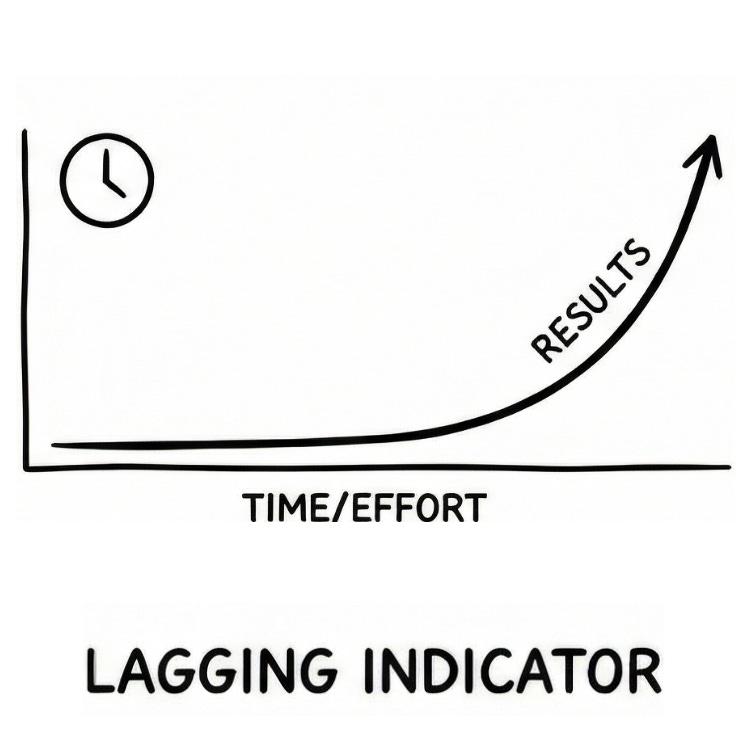
This is one of the most important things to realize about achieving worldly success. It took me years to finally internalize. Even long after I accomplished some success as an author.
Life has a delay.
Think of it like heating an ice cube. You can turn the temperature up from 10 degrees to 31 degrees and nothing happens. The ice is still there. To an outsider, it looks like you’re failing. But at 32 degrees, it melts.
You weren’t failing at 30 degrees. You were simply storing potential. You were making deposits in your account of future success.
In the next 12 months, your life might look exactly the same on the outside for the first half of the year.
This is the danger zone.
This is where most people quit because they don’t see the “ROI” on their new habits.
If you want to join the 1%, you have to be okay with working in the dark.
As you change your life and habits, remember that your hard work will not yield immediate results.
When I look back at myself, it was childish to expect that working smarter and harder would instantly improve my life.
Every positive thing you do today will compound over the next few years.
When I published my first book in 2015, a few hundred people bought it. The book was priced at 99 cents so it wasn’t a big purchase. I made a few cents for every book.
At that time, I looked at the process of writing that book as practice. I didn’t think it would go on to sell close to 100,000 copies over the next 10 years.
One thing I did do right was that I aimed to become a top 1% author. I adopted the habits of a pro, and I cut out all the habits of the 99%.
Phase 1: Stop the Bleed (months 1-3)
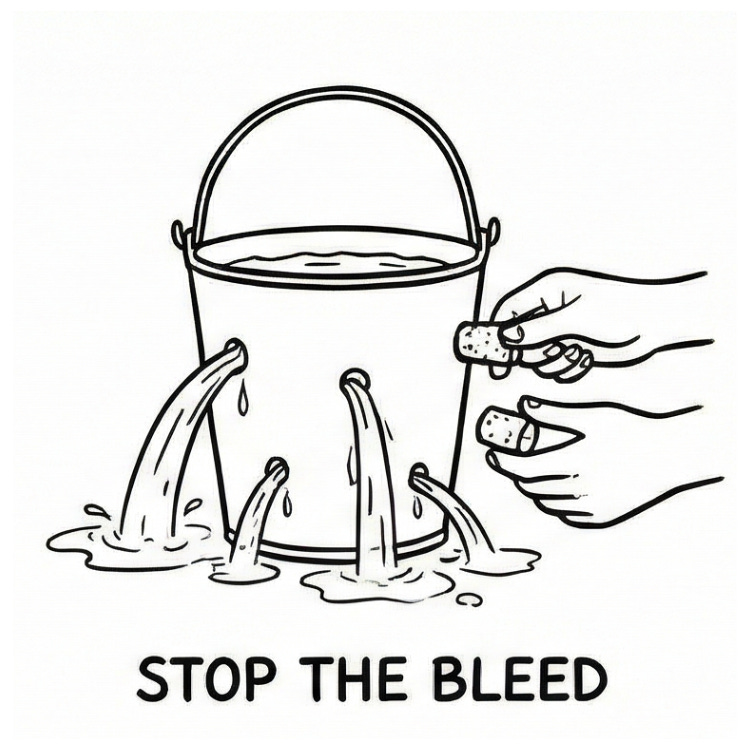
You can’t build a stable house on a swamp.
Before you try to “level up,” you have to look at what is pulling you down so you can avoid that.
This is something I learned from the investor Charlie Munger. He often talked about the importance of “Inversion.”
Instead of asking what type of life you want, ask yourself what type of life you do not want to have. To make it more specific, look at the people who you don’t want to look like.
In today’s world, we pretty much have the same answer.
Usually, that person has a few specific traits:
They react to their phone the moment they wake up.
They spend more time consuming than producing.
They complain about things they don’t control.
For the first 90 days, don’t worry about your results or what your life looks like. Don’t think about where you should be.
Just focus on avoiding the habits of unsuccessful people. This is advice that I also got from one of my mentors, early in my career.
He always said, “I just try to avoid being unsuccessful.”
He said that you should study what makes you unsuccessful, unhappy, broke, fat, stupid. Then, eliminate those things from your life.
To this day, I still live by that advice.
Avoid the following things:
Complaining
Watching the news too much
Mindless scrolling
Hanging out with losers
Quitting hard tasks
Being lazy
Talking about your goals
If you can simply stop the habits that make you average, you are already ahead of most people.
Phase 2: The Core Four (Months 4-9)
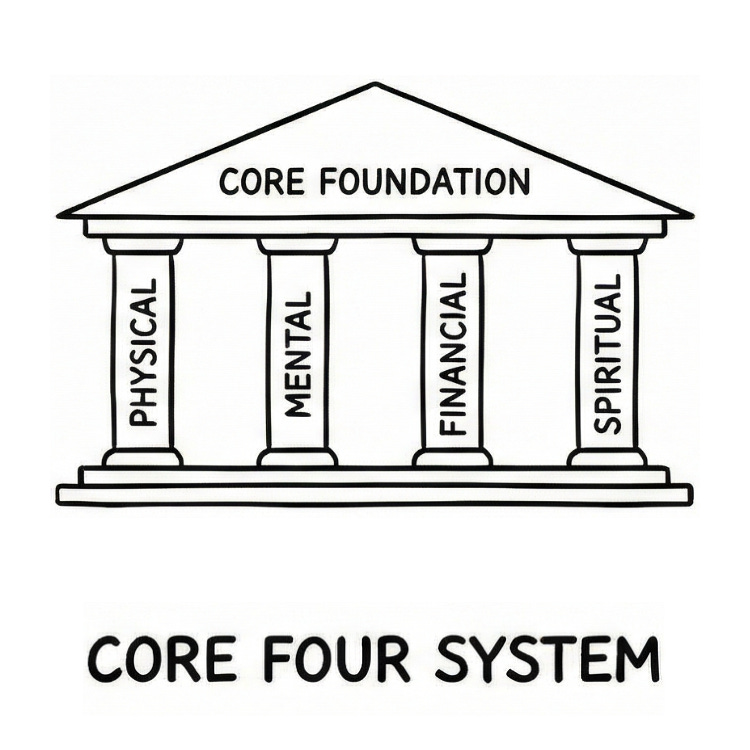
Once you’ve cleared the field, you need a system. Not a complex one. Complexity is just a way to procrastinate.
To keep it simple, you only need four non-negotiables.
These are things you do regardless of how you feel.
Physical: Build a body you can rely on
This isn’t about aesthetics. It’s about dedication. The quickest way you can test your identity and character is to see whether you can get in better shape.
After all, you control what you eat and how much time you exercise.
If you can’t keep a basic promise to your body, you won’t keep promises to your work, your finances, or your future self.
Move every day. Walk. Lift. Stretch. Sweat a little.
The exact workout doesn’t matter. Full body, bro split, group classes, spinning, running. Whatever.
Just be consistent and work out as much as you can. If that’s 4 days a week, great. If you can pull off working out daily, go for that.
The real benefit isn’t physical. It’s psychological.
Every time you train when you don’t feel like it, you send a signal to yourself: I do what I say I’ll do.
That identity compounds fast.
Mental: Raise the quality of your inputs
Garbage in, garbage out. We’ve all heard of that. And yet, we spend hours on social media, which is pretty much 100% garbage.
Have you ever thought to yourself, “WOW, that was time well-spent,” after a scroll session?
Your thinking is shaped by what you consume.
If your main inputs are social media, news, and group opinions, you’ll think like everyone else. And everyone else is stuck.
To improve your inputs, go back to the foundation of knowledge: Books.
Reading articles is great too. But they serve a different purpose. Books will give you depth. Not just in terms of knowledge, but also in terms of thinking.
Thirty minutes of reading a day is enough if it’s high-quality. One solid idea can change the way you see your work for years.
Listening to long-form interviews is also a good way to get quality information.
Journaling is also a part of the mental game.
It’s not only about acquiring quality information, but you also need to process it. That’s why it’s important to journal daily.
Financial: Build something that belongs to you
This is where most people get it wrong.
They think exchanging their time for money is the way to go. Because if you make money, you can save money, and that’s how you get rich.
That’s why you see so many people chasing promotions or switching jobs.
They’re always in search of a higher paycheck. That won’t put you in the top 1%.
The real leverage comes from acquiring income-generating skills and building assets.
A skill. A body of work. A product. A platform. Something that compounds because you own it.
For me, that was writing books and creating courses.
Two focused hours a day on something that builds long-term value. Not busywork. Not email. Not meetings. Not social media posts.
Actual work that helps you to build something with the ability to last. I chose books because I knew that once you create a great book, it can live forever.
At first, it feels pointless. No feedback. No applause. No money.
That’s normal. That’s how it’s supposed to feel.
You’re building inventory for your future self.
Spiritual: Learn to sit with yourself
Most people are addicted to stimulation and can’t spend time alone.
They need to have their phone close at all times; they have no idea what to do.
This is something I still struggle with. I always have my phone with me, even in the house. I keep telling myself that’s because I want to stay reachable for my family, but the truth is that I’m addicted to information.
Because I’ve built a seven-figure stock portfolio over the years, I have this urge to constantly check financial news. As soon as I’m not doing something, I pull out my phone and start scrolling WSJ, MarketWatch, X, my brokerage app, and so forth.
This is an addiction. I’m working on creating distance again. In the same way, I did that with social media when I decided to turn my life around. I removed all apps and never used social media for personal purposes ever since. That’s 11 years ago.
The truth is that noise fills gaps. Podcasts while walking. Music while working. Screens before bed.
It’s beneficial for your career to tune out the noise regularly. I mean multiple times a day.
No phone. No input. Just you and your thoughts.
This is where clarity and independent thinking come from.
If you can’t sit alone without distraction, you don’t control your mind. And if you don’t control your mind, nothing else matters.
This practice keeps you grounded and focused. You will become harder to manipulate by the charlatans of the world. Harder to knock off course.
It also makes the other three pillars easier to maintain.
During months four through nine, you’re not chasing results.
You’re shaping an identity. You start becoming a disciplined person.
You think long-term before life rewards you for it.
This phase feels quiet and boring.
Good.
That’s what it looks like when things are actually working.
Phase 3: The Identity Shift (months 10-12)

Around month ten, something strange happens.
You stop “trying” to be disciplined. You just are disciplined.
The resistance you felt in month one is gone. You no longer negotiate with yourself about going to the gym or doing the work. It becomes your default state.
This is when the world slowly starts to reflect your internal change. You picked a skill and started working on becoming the best in the world. You created a product or asset.
Opportunities appear. People treat you differently. Maybe you even start making some money from your skills.
At this point, your goal is to maintain your identity by doubling down on what works for you.
For me, that was writing and teaching courses. I kept publishing one book and course per year between 2016 and 2020. By that time, my books sold a few hundred copies a month.
Then, a major international publisher reached out and said they wanted the rights to four of my books. That deal closed, and by October 2020, they brought out my books in a bunch of countries in Southeast Asia. Then, Bookstagram and Booktok happened, which made my book sales explode.
Within one year, all my books sold 150,000 copies. And by now, it’s over 600,000 copies worldwide.
When I started writing, I read that 90% of books sell fewer than 1,000 copies total. My goal was to avoid the fate of the majority by following the plan I laid out here.
I didn’t have much to show for it after 12 months of writing, but I did build the foundation of getting to the top.
Remember that the 12-month mark isn’t when you “win.” It’s when the physical world starts to catch up to the person you became six months ago.
Focus on the Standard
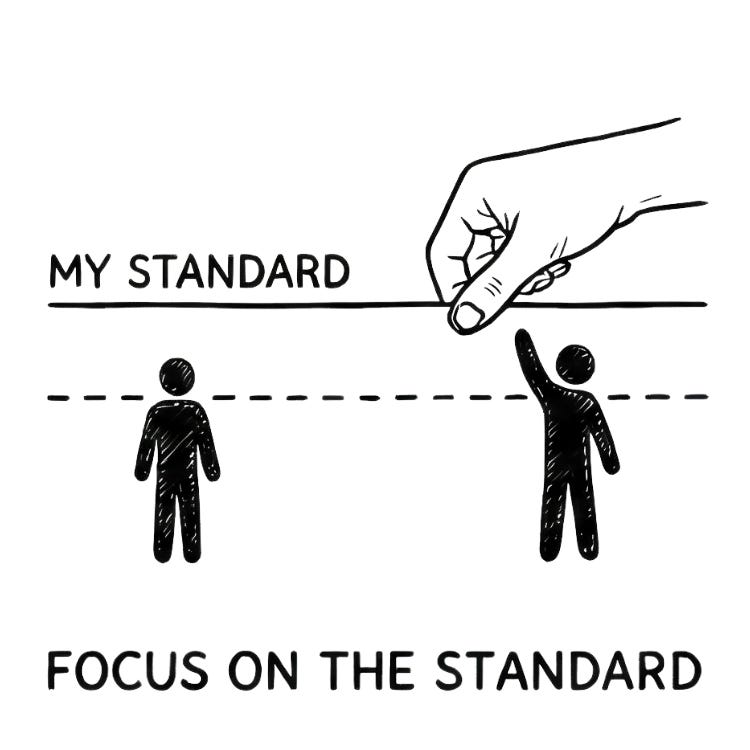
Getting into the top 1% isn’t about a lucky break or a secret tactic. It’s about raising your standards for what you accept from yourself.
Most people will read this and go back to their old patterns. That’s fine.
But if you’re tired of the same results, stop looking at the scoreboard. Look at your habits. Start with the audit today.
Know what you can control. The rest will take care of itself... in time.
One lesson ive learned since i started my business is being intentional with everything i do
Thank you Darious for simple, practical advice for sound body and mind.